
Dylan Carlson Sirvent León was working in his office at Harvard University when he began receiving frantic messages from his research colleagues. Environmental data was starting to disappear from government websites.
It was January, and President Trump had just taken office for the second time. Researchers across the country had expected some information to go offline, as it had during the first Trump administration. Those at Harvard had already started preserving some of the data on topics like greenhouse gas emissions and air pollution after the November election. But now, the situation was looking worse.
“Suddenly, things that we thought were maybe not going to go down, started going down. So that was a mad scramble,” said Carlson Sirvent León, a research fellow in quantitative social science.
The vanishing data included a U.S. Environmental Protection Agency tool known as “EJScreen,” which mapped pollution levels and demographic information across the country. Researchers like Carlson Sirvent León depend on the resource to identify the communities facing the worst environmental harms.
Carlson Sirvent León and a team of researchers from Harvard’s Salata Institute for Climate and Sustainability began a frantic push to download as much of EJScreen’s data as they could. He remembered running out of digital storage space at one point, and resorting to batch transferring files into the cloud. The process was slow and nerve-wracking, he said.
But it worked. Today, the disappeared data is once again available through a recreation of the EPA’s tool, based on information that Carlson Sirvent León and his team captured.
While helpful, many researchers say this doesn’t solve a bigger problem: The data from this tool and others are frozen in time because the federal government is no longer collecting or posting the information needed to update them.
“ What we did here was really just trying to put out fire by like, throwing a bucket of water on it,” Carlson Sirvent León said. “But this cannot replace the federal government upkeeping this data.”
Across the country, researchers and nonprofit leaders say they’re concerned the pullback of federal data collection and reporting is harming efforts to help communities exposed to the greatest risks from pollution and climate change, and to address historical inequities in access to clean air and water.
“We are losing the ability, not just to protect people from pollution, but [to] even know who is being exposed to that pollution,” said Hannah Perls, a senior staff attorney at Harvard University’s Environmental & Energy Law Program.
Perls helped with the effort to preserve EJScreen and other data tools. She, too, worries about what will come next.
“We’re willfully blinding ourselves to future challenges,” she said. “And that’s really scary.”

Dylan Carlson Sirvent León, a research fellow in quantitative social science at Harvard University, looks through data on his computer. (Robin Lubbock/WBUR)
Changing federal priorities
EJScreen was one of at least 16 federal tools related to the environment, health and equity that have been removed since Trump took office, according to Gretchen Gehrke, co-founder of the Environmental Data and Governance Initiative.
The organization collected the data for 13 tools and has already preserved five of them, she said. That includes a map of low-income communities expected to experience severe effects from climate change, like crop losses and wildfires; county reports on future climate risks; and a tool mapping differences in access to public transportation.
The data for these tools is disappearing in part because of an executive order Trump signed on his first day back in office. It eliminates federal programs on diversity, equity and inclusion, or DEI, including projects that use the term “environmental justice.”
Environmental justice refers to the effort to ensure residents in low-income areas and communities of color — which often face the worst pollution and risks from climate change — have access to clean, healthy environments. Trump administration officials say the programs are wasteful and amount to discrimination because they don’t serve all Americans equally.
In response to questions from WBUR about EJScreen and other data, the EPA said it is “working to diligently implement President Trump’s executive orders, including the ‘Ending Radical and Wasteful Government DEI Programs and Preferencing,’ as well as subsequent associated implementation memos.”
“President Trump was elected with a mandate from the American people to do just this,” the agency’s statement said. “President Trump advanced conservation and environmental stewardship in his first term and the EPA will continue to uphold its mission to protect human health and the environment in his second term.”
In March, the EPA shuttered its environmental justice offices. Administrator Lee Zeldin said in a video statement that the effort to help communities left behind on environmental issues “sounds great in theory,” but in practice, funds left-wing activist groups. He said the Trump administration’s programs would not discriminate.
“When President Trump speaks about a Golden Age for America, that is for all Americans regardless of race, gender, creed and background,” Zeldin said.
Impacts in Mass.
Many environmental groups in Massachusetts rely on federal environmental justice tools to do their work.
Staff at the Mystic River Watershed Association used EJScreen to find out what parts of the watershed get the hottest during heatwaves, and how many residents in those areas are older adults who use public transportation. The information helped the Arlington nonprofit pick the best spots to place shaded bus stops.
“ What’s at stake is our ability to bring the right solutions to the right people and to the right communities,” said Isaiah Johnson, outreach and media manager for the group.
Data from federal tools can also bolster grant proposals by demonstrating the scope of a problem, he said.
Salem State University Professor Marcos Luna, who serves on the Massachusetts Environmental Justice Council, said state agencies also depend on federal data, using it to guide environmental regulations.
“ It’s just really an invisible infrastructure that we take for granted,” Luna said.
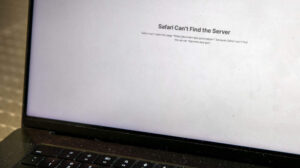
A URL for the page that was formerly the EPA’s Environmental Justice Screening and Mapping Tool results in a page not found. (Robin Lubbock/WBUR)
Last year, Massachusetts became the first state in the country to require that permit applications for new energy projects include an analysis of the proposed host area’s past exposure to pollution. To help applicants, the state’s Department of Environmental Protection created a tool using data from EJScreen.
“Trusted federal data sources help us lower costs, protect public health and grow local economies,” the department said in a statement. “In Massachusetts, we remain committed to environmental justice and equity.”
It took decades of advocacy from community organizations working to address environmental harms in their own backyards to get tools like EJScreen, said Jon Levy, chair of the Department of Environmental Health at the Boston University School of Public Health.
“ The loss for the general population I think is far worse than for researchers,” he said.
‘Where are the needs?’
Federal changes are also complicating communities’ efforts to collect their own data.
The Hitchcock Center in Amherst had planned to expand a network of air quality monitors with a $500,000 environmental justice grant from the EPA. The Trump administration canceled the funding — and millions more dollars for other projects across Massachusetts — citing the executive order ending diversity and equity initiatives.
The monitors were meant to capture differences in air quality in the North Quabbin region, spanning from river valleys to high elevation villages, said Chrissy Larson, an education coordinator at the Hitchcock Center. She hoped expanding the network would provide more data for residents concerned about the worsening effects of Canadian wildfire smoke. Information on air quality would help them make decisions about planning outdoor activities or school programs, Larson said.
“ It’s a question of data,” she said. “We all deserve to have healthy air to breathe.”
Billy Spitzer, the center’s director, said he’s frustrated and thinks the Trump administration is misunderstanding environmental justice work.
“They’re communities that are dealing with a legacy of industrial activities, or choices that were made about where to locate a highway,” he said. “It’s really not about politics. It’s really about understanding where are the impacts, where are the needs?”
A class action lawsuit filed in June seeks to restore environmental justice grants to groups like the Hitchcock Center. In the meantime, Spitzer said his organization plans to look for other sources of funding to continue the air quality project.
“ We’re not willing to admit that this work is lost,” he said. “It’s really important. It benefits the community.”